




Blogs
7 Common Reasons for Terrace Water Leakage: Causes, Warning Signs and Practical Solutions

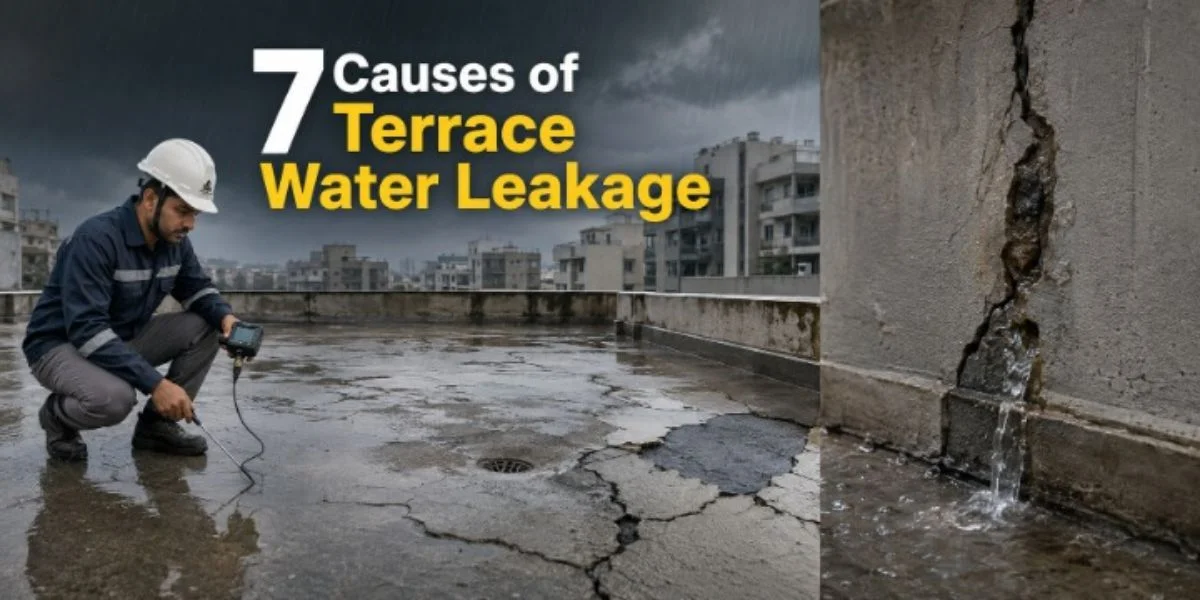
When rainwater starts appearing on a ceiling, wall, or terrace floor, the visible damp patch is rarely the whole problem. In many homes and buildings, Terrace Water Leakage begins with a small crack, blocked drain, damaged waterproofing layer, or poor slope and gradually becomes a costly structural concern.
In this guide, I’ll explain the seven most common causes, how I identify them, what repair methods make sense, and when professional help is worth considering. This article, “7 Common Reasons for Terrace Water Leakage,” is designed to answer practical questions from homeowners, students, property managers, and anyone trying to understand why water enters a building during heavy rain.
At Radco Buildtech Pvt. Ltd., we approach leakage as a building problem rather than simply treating the stain visible on the ceiling. Finding the source first is what helps produce a more dependable repair.
Why Terrace Water Leakage Starts in the First Place
Understanding the seven most common causes
A terrace is exposed to intense sunlight, temperature changes, rainwater, dust, and regular expansion and contraction. Over time, these conditions can weaken protective layers.
The seven common causes I see are:
- Cracks in concrete or plaster: Small surface cracks can become pathways for rainwater.
- Damaged waterproofing: An old or poorly applied membrane may lose its protective performance.
- Incorrect terrace slope: Water that does not drain quickly can remain on the surface and find weak points.
- Blocked outlets and pipes: Leaves, dust and debris can stop rainwater from leaving the terrace.
- Weak joints and construction gaps: Junctions around parapet walls, pipes and drains require careful treatment.
- Poor-quality previous repairs: Covering a leaking area without addressing the source can make the problem return.
- Ageing surfaces: Continuous weather exposure eventually affects concrete, coatings and protective layers.
These causes can overlap. For example, standing water can worsen an existing crack, while an ageing waterproofing layer can make a minor construction joint much more vulnerable.
How to Identify Terrace Water Leakage Before It Gets Worse
Warning signs I recommend checking
A leak does not always appear directly below its entry point. Water can travel through concrete, masonry and joints before becoming visible indoors.
Look for damp patches, peeling paint, bubbling plaster, musty odours, white salt deposits, dark ceiling marks and recurring moisture after rain. A terrace may also show standing water several hours after rainfall.
A useful distinction is between Roof Water Leakage and moisture caused by plumbing or internal sources. If dampness appears mainly after rainfall and becomes worse during storms, the terrace should be inspected carefully.
For a Chhat Leakage problem, I would not recommend simply repainting the affected ceiling. The visible damage should be treated as a symptom until the actual entry point has been identified.
| Warning sign | What it may indicate | Recommended first check |
| Damp ceiling patch | Rainwater penetration | Inspect terrace above |
| White deposits | Moisture movement through masonry | Check cracks and joints |
| Standing terrace water | Drainage or slope problem | Inspect outlets and slope |
| Peeling paint | Repeated moisture exposure | Trace the source |
| Leakage after every storm | Waterproofing failure | Professional terrace inspection |
Early inspection can reduce the extent of repair work and prevent repeated patching.
Also Read: Waterproofing Failure Causes: Common Reasons, Warning Signs, Solutions & Prevention
Drainage and Terrace Slope Problems That Let Water Stay
Why standing water creates a serious risk
A terrace should move rainwater toward designated outlets efficiently. When the slope is insufficient, damaged, or incorrectly designed, water may remain in low spots.
This is one of the most overlooked reasons for Terrace Leakage. Homeowners sometimes notice the problem only after a heavy downpour because light rainfall may disappear before causing visible damage.
Blocked rainwater pipes create another issue. Even an otherwise sound waterproofing system can face unnecessary stress when water remains on the surface for long periods.
For properties in areas that experience intense seasonal rainfall, proper drainage should be considered alongside Terrace Waterproofing rather than as a separate afterthought.
Cracks, Joints and Ageing Surfaces on RCC Terraces
Where water commonly finds its pathway
RCC roofs are strong, but strength does not mean they are completely immune to cracking. Temperature variation, structural movement, ageing and poor detailing can create vulnerable areas.
Pay particular attention to:
- Pipe penetrations, drain junctions and parapet-wall connections.
- Construction joints and areas where different materials meet.
- Cracks that repeatedly reopen after previous filling or surface treatment.
For RCC Roof Waterproofing, I would first assess the condition of the substrate and identify active cracks before selecting a coating or membrane. A material chosen without understanding the surface condition may deliver only temporary improvement.
Similarly, Roof Leakage around pipe joints often requires detailed treatment instead of simply applying another layer of coating across the entire terrace.
Failed Waterproofing and Choosing the Right Repair Method
Comparing practical waterproofing approaches
Not every terrace requires the same treatment. The appropriate solution depends on the substrate, extent of damage, drainage condition, exposure, previous waterproofing system, and expected service conditions.
| Waterproofing approach | Where it may help | Important consideration |
| Protective roof coating | Sound surfaces requiring additional protection | Surface preparation is critical |
| Membrane-based system | Areas requiring a continuous waterproof barrier | Detailing at joints matters |
| PU-based waterproofing | Selected cracks, joints and exposed areas | Product and application must suit the substrate |
| Cementitious treatment | Certain concrete and masonry applications | Correct preparation and curing are important |
| Repair plus drainage correction | Terraces with standing water | Waterproofing alone may not solve the root cause |
Professional Waterproof Roof Coating Services can be useful where the existing surface is suitable for coating. However, coating over loose, contaminated, or badly cracked material can compromise the result.
For some properties, PU Waterproofing in Delhi NCR may be considered because polyurethane systems can provide flexible protection when appropriately specified and applied. The correct choice should follow a site assessment rather than a generic recommendation.
How to Stop Terrace Water Leakage During Monsoon
A practical inspection and prevention routine
If you are searching for “how to stop terrace water leakage”, start with diagnosis instead of immediately buying a waterproofing product.
Before monsoon, I recommend checking the terrace surface, outlets, parapet joints, pipe penetrations, and visible cracks. Remove debris from drainage points and check whether water flows freely toward the outlets.
A proper terrace leakage solution should address the entry route, not just the indoor stain. If water is entering through a failed joint, for example, repairing only the ceiling will not stop future rainwater penetration.
The same principle applies to “barish mein chhat se paani aana”. The Hindi phrase describes the symptom, but the repair needs to identify the underlying pathway.
Terrace Waterproofing Options and Cost Factors in India
What influences the final waterproofing cost
People often search for Terrace Waterproofing Cost in India as though there is one standard rate. In practice, the final cost depends on several factors.
| Cost factor | Why it matters |
| Terrace area | Determines material and labour requirements |
| Surface condition | Damaged surfaces need additional preparation |
| Existing waterproofing | Removal or repair may be necessary |
| Number of cracks and joints | More detailing can increase labour |
| Drainage condition | Drain repairs may be required |
| Waterproofing system | Different systems have different material costs |
| Accessibility | Difficult sites can increase application effort |
I would always compare quotations based on the proposed system, preparation, number of coats, detailing, testing and warranty terms—not simply the lowest price.
This is also where experienced Waterproofing Contractors in Delhi NCR can add value by assessing the site before recommending a system. Reliable Waterproofing Contractors in Delhi NCR should be able to explain what is failing and why the proposed repair addresses it.
Choosing Waterproofing Professionals in Delhi NCR
What I would check before hiring a contractor
The right contractor should be able to explain the diagnosis in straightforward language. Ask whether the team will inspect drainage, cracks, joints, parapets and previous treatments before beginning work.
When comparing the Best Waterproofing Services in Delhi NCR, I would look beyond advertisements and check practical indicators such as project experience, trained applicators, material specifications, surface preparation and written scope of work.
The Best Waterproofing Services in Delhi NCR should also avoid promising a “permanent” result without discussing the building conditions. No waterproofing system can compensate indefinitely for unresolved structural movement, poor drainage or neglected maintenance.
For homeowners researching PU Waterproofing in Delhi NCR, the same principle applies: the product should be selected according to the actual site requirement and installed according to its technical specifications.
From Chhat Seepage to a Long-Term Roof Waterproofing Plan
Moving from temporary patches to proper protection
Chhat Seepage is often treated only when the ceiling becomes visibly damaged. By that stage, moisture may already have travelled through the roof assembly.
A sensible Chhat Waterproofing plan considers the complete surface: drainage, cracks, joints, parapets, pipe penetrations and the waterproofing layer itself.
The same approach helps with Roof Waterproofing. Instead of repeatedly sealing one visible spot, I prefer a systematic inspection that establishes whether the issue is localised or widespread.
If you are looking for a “terrace waterproofing solution”, the answer may involve crack repair, drainage correction, surface preparation and a compatible waterproofing system rather than one product alone.
When Professional Terrace Inspection Becomes Necessary
Knowing when DIY repair is not enough
Minor maintenance can be handled by property owners, but recurring moisture needs more attention. If leakage returns after every rainfall, spreads to different rooms, or appears alongside major cracks, professional inspection becomes important.
The phrase “chhat se paani tapakne ka solution” sounds simple, but the correct treatment depends on where the water is entering and how it is travelling through the building.
A qualified inspection can also distinguish terrace moisture from plumbing problems, condensation, and other internal sources. This reduces the risk of spending money on a waterproofing system when the actual problem lies elsewhere.
At Radco Buildtech Pvt. Ltd., the goal should be straightforward: understand the cause, select a suitable treatment, prepare the surface properly, and execute the work carefully.
Conclusion: Prevent Monsoon Roof Leakage Before It Becomes Costly
Take action before the next heavy rainfall
The most common causes of terrace leakage include cracks, damaged waterproofing, poor drainage, blocked outlets, weak joints, unsuitable previous repairs, and ageing surfaces. Identifying these issues early can help prevent recurring moisture and unnecessary repair expenses.
A good permanent solution for roof leakage starts with diagnosis. Waterproofing should not be treated as a one-size-fits-all product purchase. The condition of the terrace, drainage system, concrete surface, and previous repairs all influence the right approach.
If your property is experiencing Monsoon Roof Leakage, recurring dampness, or unexplained ceiling stains, consider arranging a professional inspection before the next major rainfall. Radco Buildtech Pvt. Ltd. can help you understand the available waterproofing options and determine the practical next step for your property.
For service details, project consultation, or to learn more about our waterproofing work, contact our team or visit our Google Business Profile. Taking action while the problem is still manageable can be far easier than dealing with extensive water damage later.
