



Blogs
Waterproofing Failure Causes: Common Reasons, Warning Signs, Solutions & Prevention

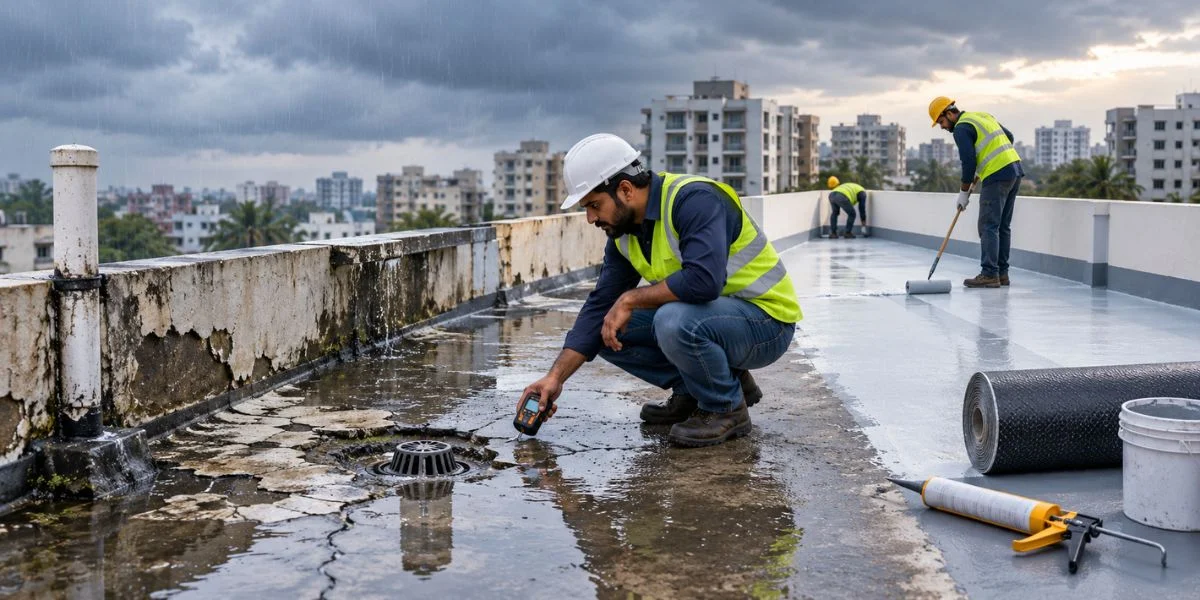
Waterproofing is meant to protect a building from water leakage, dampness, and moisture infiltration, but even a well-designed system can fail when installation or maintenance is neglected. Understanding waterproofing failure causes helps property owners identify problems early and choose the right corrective action. From poor surface preparation to drainage defects, the reason behind seepage is not always obvious. For reliable assessment and professional solutions, Radco Buildtech Pvt. Ltd. focuses on practical, durable waterproofing solutions suited to different building conditions.
What Are the Main Waterproofing Failure Causes?
The most common waterproofing failure causes are connected to preparation, material selection, application, drainage, joints, movement, and maintenance. A waterproofing system is only as effective as its weakest component.
Typical reasons include:
- Poor surface preparation or substrate preparation
- Improper application of waterproofing materials
- Poor workmanship and installation errors
- Wrong waterproofing material for the exposure or substrate
- Inadequate thickness or curing
- Poor membrane adhesion
- Untreated cracks, joints, corners, and penetrations
- Ponding water caused by inadequate slope and drainage
- Membrane damage from later construction activity
- Lack of inspection and preventive maintenance
Government construction specifications also emphasise appropriate preparation, curing, material specifications, and application procedures for waterproofing-related work.
Poor Surface Preparation and Application Errors
A waterproofing layer cannot compensate for a weak or contaminated substrate. Dust, laitance, oil, loose mortar, existing coating residue, or trapped moisture can prevent proper adhesion. This is one of the major causes of waterproofing failure across roofs, terraces, balconies, and concrete surfaces.
Why Surface Preparation Matters
Before applying liquid waterproofing, cementitious waterproofing, bituminous waterproofing, or a polyurethane coating, the surface should be assessed and prepared according to the selected system and manufacturer’s requirements.
Poor preparation may result in:
- Blistering and peeling
- Delamination
- Coating failure
- Cracking
- Premature membrane separation
- Moisture trapped beneath waterproofing layers
Current CPWD technical guidance for terrace waterproofing similarly specifies mechanical preparation, removal of loose material, treatment of leakage points and joints, and controlled coating thickness.
Waterproofing Material Selection and Membrane Problems
Selecting a waterproofing product simply because it is inexpensive can create long-term problems. Materials should match the substrate, water exposure, movement, temperature, traffic, and expected service conditions.
For example, a flexible polyurethane system may be appropriate for some applications, while cementitious waterproofing, bituminous waterproofing, epoxy coating, or another waterproofing membrane may suit different conditions.
How Waterproofing Failure Causes Develop in Membranes
A waterproofing membrane failure may occur when the membrane is too thin, poorly bonded, incompatible with the substrate, incorrectly installed, or damaged after installation.
Common membrane-related problems include:
- Punctures and membrane damage
- Inadequate thickness
- Poor membrane adhesion
- Improper overlapping or joint treatment
- Inadequate detailing around corners
- Improper flashing installation
- UV degradation and weather exposure
Using poor-quality materials or ignoring manufacturer specifications can also shorten waterproofing lifespan.
Cracks, Joints, and Structural Movement
Waterproofing does not stop concrete from moving. Concrete can experience shrinkage, thermal movement, settlement, vibration, and other forms of building movement. Existing cracks can therefore become pathways for seepage if they are not properly assessed and treated.
Structural cracks and cracks in concrete require particular attention because simply covering them with a coating may not address their underlying cause.
Construction joints and expansion joints also need appropriate detailing and waterproofing sealant. ACI guidance notes that joints can provide pathways for fluid infiltration and require suitable treatment for their service conditions.
Drainage, Ponding Water, and Hydrostatic Pressure
Waterproofing should work together with an effective drainage system. Even a good membrane can face excessive stress when water remains on the surface for long periods.
Poor slope and drainage can create ponding water on roofs and terraces. Blocked outlets, inadequate roof drainage, poorly designed downpipes, and defective drainage systems can all contribute to recurring water leakage.
For basements and foundations, hydrostatic pressure is another concern. Water-saturated soil can increase pressure against below-grade walls and slabs, contributing to cracking and leakage.
Warning Signs of Waterproofing Failure in Buildings
Early detection can prevent a small defect from becoming an expensive repair. The visible symptoms may appear far from the actual entry point of water.
Signs You Should Not Ignore
Watch for:
- Dampness or dark patches on walls and ceilings
- Water stains after rainfall
- Persistent seepage
- Blistering, peeling, or flaking coatings
- Musty odours
- Cracking or delamination
- Efflorescence on concrete or masonry
- Repeated leakage around drains and pipes
- Ponding water on terraces or roofs
Plumbing leakage should also be investigated before assuming the membrane has failed. A leaking pipe, poorly sealed penetration, or defective drain can imitate waterproofing defects.
Waterproofing Failure Caused by Building Area
Different areas experience different forms of water exposure, so diagnosis should be location-specific. A building waterproofing failure may involve several independent defects rather than one universal problem.
Roof and Terrace Problems
Roof waterproofing failure and terrace waterproofing failure commonly involve ponding, cracks, membrane damage, inadequate flashing, and poor drainage. These areas also experience intense sunlight and weather exposure.
If you are asking why waterproofing fails on terraces, inspect the slope, outlets, joints, surface condition, membrane continuity, and areas affected by later construction work.
Basement and Bathroom Problems
Basement waterproofing failure can involve hydrostatic leakage, wall cracks, construction joints, groundwater, or inadequate external drainage.
Meanwhile, bathroom waterproofing failure may originate around floor-wall junctions, shower areas, drains, plumbing penetrations, or poorly sealed joints. Identifying the actual water path is essential before beginning repairs.
Concrete and Waterproofing System Failures
Concrete waterproofing failure can develop when porous concrete, cracks, joints, or construction defects provide pathways for water. Capillary action can also allow moisture to migrate through porous materials.
The broader waterproofing system failure causes may include incompatible products, inadequate detailing, improper curing, poor workmanship, and failure to accommodate structural or thermal movement.
Why Waterproofing Treatment Fails
A waterproofing treatment failure often occurs when contractors treat only the visible symptom. Applying another coating over an unstable or wet surface may temporarily hide the problem without resolving the underlying water path.
Professional assessment should consider:
- Moisture levels and source of water
- Concrete condition and porosity
- Existing waterproofing layers
- Drainage and slope
- Joint and penetration details
- Membrane condition and adhesion
How to Fix Failed Waterproofing Correctly
Effective waterproofing repair starts with diagnosis rather than immediately adding another coating. Leak detection, visual inspection, moisture assessment, and, where appropriate, water ponding tests can help establish the source.
Depending on the condition, corrective work may involve:
- Removing failed or loose coatings
- Repairing cracks and defective concrete
- Treating construction and expansion joints
- Improving drainage and slope
- Resealing pipe penetrations and outlets
- Replacing damaged membrane sections
- Applying a compatible waterproofing system
- Allowing appropriate curing and drying time
- Conducting quality checks before handover
For specialised projects, Waterproof Roof Coating Services can be considered where the roof substrate and existing system are suitable. Likewise, PU Waterproofing in Delhi NCR may be appropriate for selected applications requiring a flexible coating system.
At Radco Buildtech Pvt. Ltd., professional assessment can help distinguish waterproofing defects from plumbing leakage, structural movement, drainage problems, and other sources of moisture.
Waterproofing Prevention and Long-Term Maintenance
The best approach to waterproofing prevention is to treat waterproofing as a complete building system rather than a one-time coating job. Good design, skilled installation, inspection, and regular maintenance all contribute to long-term performance.
A practical preventive approach includes:
- Inspecting roofs and terraces before and after monsoon periods
- Keeping rainwater outlets and drains clear
- Checking flashings, joints, and sealants
- Monitoring new cracks or damp patches
- Preventing unnecessary punctures to membranes
- Maintaining plumbing and drainage systems
- Checking areas around pipes and penetrations
- Following manufacturer specifications during repairs
- Recording previous waterproofing work for future maintenance
CPWD maintenance guidance recommends identifying the root causes of leakage and seepage and addressing them through planned maintenance rather than repeatedly treating symptoms.
Choosing Professional Waterproofing Solutions in Delhi NCR
When recurring leakage keeps happening, even after earlier treatments, getting a professional diagnosis can actually save time and also prevent those annoying repair costs. Generally, experienced Waterproofing Consultants in Delhi NCR can look at the substrate, water source, drainage routes, joints, any existing membrane, and even the surrounding construction, then suggest a system that matches what’s really going on.
For many suitable roofs, Waterproof Roof Coating Services can act as an extra, kind of protective layer. At the same time, PU Waterproofing in Delhi NCR might be picked when a flexible polyurethane-based protection is technically a fit.
The point isn’t only to block today’s visible leak. The real aim is to figure out why water found a way into the structure, fix the underlying defect, choose a compatible waterproofing setup, and then set up a reasonable inspection along with a waterproofing maintenance programme.
Waterproofing Failure Causes and Prevention: Key Takeaways
Understanding why waterproofing systems fail helps you spot trouble a bit earlier, so it doesn’t turn into a costly mess later. A lot of times it’s the usual suspects, like poor preparation, improper application, choosing unsuitable materials, not providing adequate thickness, cracks that show up and spread, joints that aren’t properly treated, poor drainage, hydrostatic pressure buildup, membrane damage, and then just no real maintenance over time.
What you do next depends on the building and where the water is coming from. For example, a roof might need better slope plus membrane detailing, while a basement often calls for drainage along with hydrostatic-pressure management. In bathrooms, you usually have to focus on the areas around drains, joints, and plumbing penetrations, because that’s where moisture tends to sneak in.
If you’re seeing recurring leakage, dampness, or seepage, don’t keep putting on product after product without actually finding the root cause. Reach out to Radco Buildtech Pvt. Ltd. for a professional waterproofing assessment and solutions, or take a look at our Google Business Profile to see our services and talk through the best approach for your property.
